


Bloons TD Battles
4.3105.84K Reviews
App Specs
- Version
- 6.24
- Updated On
- License
- Free
- Downloads
- 10,000,000+
- Developer
- ninja kiwi
- Categories
- Strategy
- Platform
- Android
Screenshots
 Analysis by AppCompare
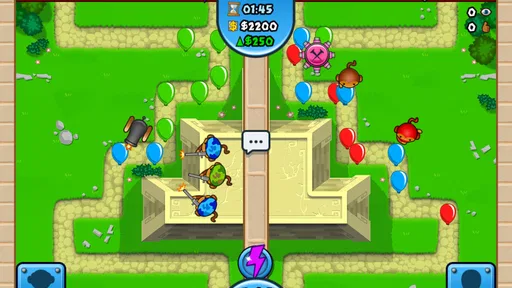
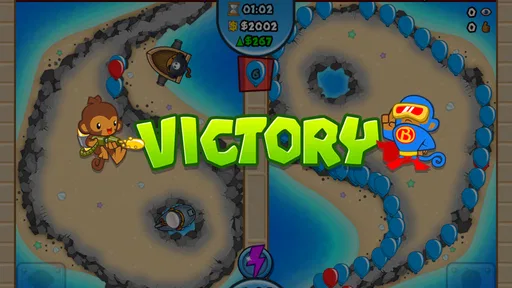
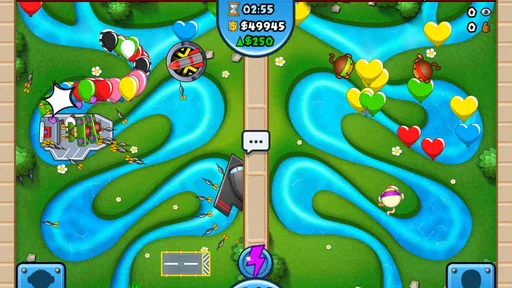
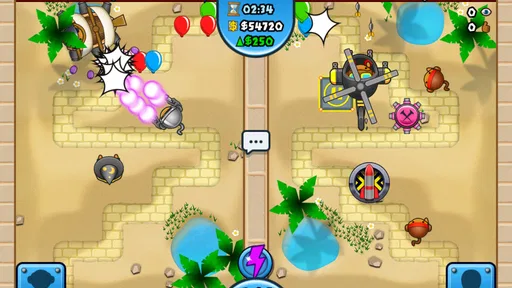
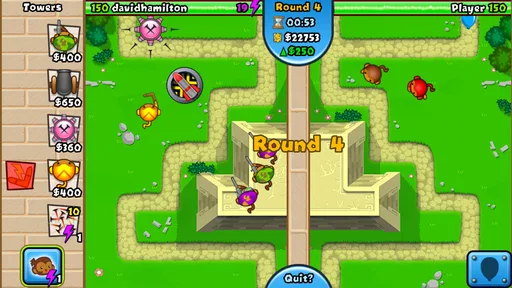
Bloons TD Battles is the kind of strategy game I can pick up for a short break and still feel that every decision matters. Instead of defending a lane alone, I face another player while both of us build monkey defenses, manage income, and send Bloons toward the opponent. That competitive structure makes it feel very different from a standard tower defense game: I am not simply trying to survive a fixed challenge, because my choices are constantly affecting another person’s plan.
Developed by ninja kiwi, this free strategy game has been available since July 18, 2013. It is rated for Everyone, runs on Android from version 5.0 onward, and its current version is 6.24. The scale of its audience is also easy to notice: it has passed over 10 million installs, with an average rating of 4.3 from around 912 thousand ratings and roughly 106 thousand written reviews. Those figures do not guarantee that every player will enjoy it, but they do reflect a game that has remained visible and playable for a long time.
How the free entry point affects the value
The most important cost detail is straightforward: the game is free to download. That makes it easy to test without committing money first, which suits a competitive title where personal taste matters so much. Some players will enjoy the quick pressure and repeated matches immediately; others may find the opponent-versus-opponent format more stressful than relaxing tower defense. Free access lets you discover which group you belong to before spending anything.
There are in-app purchases priced from $0.99 to $99.99 per item. I therefore separate the value of the free game from the value of optional spending. The free entry point is the reason I can recommend trying it broadly, while any purchase should be judged as a convenience or enhancement for someone who already knows they wants to keep playing. I would not install it expecting that paying automatically replaces practice, timing, or understanding of the battlefield.
That distinction matters in a competitive strategy game. If I spend money, I want the purchase to make sense for my own enjoyment rather than feel like an admission fee. A new player can learn whether the core matches are engaging without paying, then decide later if optional purchases fit their habits. For cautious users, that is a healthier approach than treating the largest available item as the intended route into the game.
The real value is in repeated decisions
The strongest part of the experience is not the cartoon presentation by itself. It is the way a simple-looking match turns into a chain of small judgments. I need to think about immediate defense, future income, the timing of pressure, and whether an opponent is preparing for my next move. A tower that seems useful in one moment may be the wrong choice if it leaves my economy too weak to respond later.
This creates value for players who enjoy learning through repetition. I can finish a match, identify the point where my plan collapsed, and try a different opening next time. The game rewards attention rather than passive watching. Even when a match is short, it can leave me with a specific lesson: I expanded too early, defended the wrong threat, or failed to recognize that my opponent was saving resources for a stronger push.
Worth Reading Before You Choose

EA SPORTS FC Mobile 26 Is a Bigger Football Game, but It Takes Time

Flipboard Shows What News Apps Must Do Beyond the Feed

Switching to Android Auto Means Rethinking Your Driving Routine

Google Calendar Makes a Crowded Week Easier to Manage

Ludo King Makes the Most of the Minutes Between Plans

Baby Panda World Brings Quick Play to Modern Phones, but Its Game Library Feels Busy
Another useful quality is the tension between attacking and defending. Sending Bloons is not merely an offensive button; it is part of the economy and the psychological contest. If I focus too heavily on pressure, my own defenses may become fragile. If I spend everything on safety, I may give the other player room to build an advantage. That trade-off is what keeps the format from becoming a routine placement exercise.
Why it feels different from ordinary tower defense
In a conventional single-player tower defense game, I usually study a level, learn its patterns, and refine a solution. Here, the opponent changes the problem. A familiar defensive setup can still fail if the other player applies pressure at an awkward time or forces me to spend resources earlier than planned. The game is therefore closer to a compact real-time strategy duel than to a purely defensive puzzle.
That comparison also explains its main appeal. Players who want predictable pacing, a campaign they can pause freely, or a calm experience may prefer a traditional tower defense game. Bloons TD Battles is better for someone who enjoys uncertainty and wants their decisions tested by another person. I find it more exciting than a fixed wave challenge, but I also find it less forgiving when I only have a few minutes and do not want to concentrate.
The cartoon monkeys and Bloons keep the tone approachable, yet the match structure can become surprisingly demanding. The friendly visual style should not be mistaken for a casual game with no depth. Once I start paying attention to economy and timing, the colorful presentation becomes a wrapper around a competitive system that expects me to adapt.
Practical habits that improve the first matches
My first useful habit is to avoid treating every round as a race to spend everything. Holding a little flexibility can be more valuable than making the board look impressive immediately. When I have no room to respond, an opponent’s change of pace can expose the weakness of my entire setup. I get better results when I ask what my next defensive problem will be before committing all available resources.
A second habit is to watch the opponent’s behavior instead of staring only at my own side. Their spending pattern can reveal whether they are prioritizing defense, building income, or preparing pressure. I do not need to guess perfectly; even a rough reading helps me choose between strengthening my position and answering their plan. This is one of the less obvious skills in the game, because the interface invites constant attention to my own towers.
A third tip is to review losses by cause rather than by emotion. Losing after a late attack does not always mean the attack was too strong. It may mean I delayed a necessary upgrade, mismanaged income, or allowed the opponent to dictate the pace. When I name the actual mistake, the next match becomes an experiment instead of a repeat of the same frustration.
I also recommend changing one major decision at a time while learning. If I alter my opening, defensive placement, and spending rhythm all at once, I cannot tell what helped. A more deliberate approach makes the game’s lessons clearer. This is especially useful for younger players or anyone new to competitive strategy, because the bright visuals can hide how many separate choices are being made.
Where the experience can become frustrating
The same real-time pressure that makes a close match exciting can make a bad match feel abrupt. A poor early decision may limit my options later, and I may understand the mistake only after the opponent has already built a comfortable lead. Players who prefer generous recovery mechanics could find that harsh. I enjoy the tension, but I would not describe every match as relaxing or equally satisfying.
There is also a learning curve that is easy to underestimate. The basic idea is immediately understandable, but effective play depends on recognizing timing, economy, and defensive priorities together. A beginner can know what the towers and Bloons are doing and still lose repeatedly because the larger rhythm of the match has not yet become familiar. That is normal, but it means the free price does not make the game effortless.
Competitive games can also encourage unhelpful spending habits if I start believing that a purchase will solve every difficult match. I would keep the financial decision separate from the emotional moment after a loss. The sensible test is whether I am already enjoying the core game and expect to continue playing it, not whether I am trying to erase a frustrating result.
The age rating of Everyone makes the presentation accessible, but an all-ages label does not mean every child will enjoy the pressure of player-versus-player matches. I would consider whether the intended player likes competition, can handle quick setbacks, and understands that optional purchases should be treated carefully. For a family looking for a quiet, cooperative, or story-driven game, this may not be the best fit despite its approachable art style.
Everyday situations where it works well
For me, the best use case is a short period when I want active concentration rather than passive entertainment. A match can give a lunch break or a brief wait some structure, provided I have enough uninterrupted time to finish what I start. I would not open it while expecting frequent interruptions, because a real-time contest is much less enjoyable when my attention is divided.
It can also suit friends who like comparing improvement over several sessions. One person may begin with better instincts, but the other can learn by observing spending choices and identifying recurring weaknesses. The game has more value in that situation than as a one-time download, because the fun comes from noticing how decisions change from match to match.
On the other hand, I would skip it if my ideal mobile game is something I can pause at any moment without consequence. I would also look elsewhere if I want a long narrative campaign, a purely offline-style experience, or a strategy game built around slow planning rather than immediate reactions. Those are not faults in the game’s intended format; they are signs that its particular kind of value does not match every player.
Who receives the most for free
The strongest audience is a player who enjoys tower defense but wants direct competition instead of a fixed series of waves. That person gets a meaningful free starting point: enough of the appeal is visible in the ordinary match loop to decide whether the game deserves regular play. Newcomers should expect to learn gradually, while experienced strategy players may appreciate having a compact format for testing judgment and timing.
It is also a good choice for someone who values replayability over a guided campaign. The opponent’s choices prevent every match from feeling identical, and losses can provide useful information when I take time to analyze them. The value comes less from collecting a single perfect solution and more from adapting under pressure.
Players who dislike competitive uncertainty should be more cautious. If I want a guaranteed sense of progress, a peaceful building game, or a level that behaves exactly as expected, another strategy title may serve me better. I would also avoid optional purchases until I have established that the free experience itself is enjoyable. That keeps the cost decision grounded in actual use rather than anticipation.
My final buy-or-skip judgment
I recommend trying Bloons TD Battles if you want a free, colorful strategy game where defense, economy, and offense collide in real time. Its best quality is the way it turns familiar tower defense ideas into a personal contest. I can play casually at first, then gradually discover that placement, timing, and reading the opponent matter far more than the simple presentation suggests.
I would skip it if I need a slow, pause-friendly, story-focused, or reliably relaxing experience. The competitive format can punish hesitation, and the learning process may feel demanding before it becomes rewarding. I would also treat the in-app purchase range carefully: the free download is the clear starting value, while spending should be reserved for players who already know they want to continue.
My verdict is positive, with that qualification in mind. Bloons TD Battles delivers its best value through free access to a replayable player-versus-player strategy loop, not through the promise that purchases will replace skill. If that distinction sounds appealing, I think it is worth installing and learning at your own pace. If what you really want is a calm tower defense puzzle with no opponent pushing back, a more traditional alternative will probably make you happier.
For the right player, Bloons TD Battles remains an approachable way to practice quick strategic thinking. I would begin without spending, focus on understanding economy and timing, and judge the game after several matches rather than after one frustrating defeat. That approach gives the free version a fair chance while keeping the purchase decision sensible and personal.
Pros
- Fast matches are ideal for short gaming sessions.
- Different tower paths encourage varied strategies.
- Replay mode helps review mistakes and improve tactics.
- Frequent events can add extra goals beyond standard battles.
- The cartoon visuals are colorful and easy to follow.
Cons
- Some upgrades and content may require significant grinding.
- Random matchmaking can create uneven or frustrating battles.
- Later rounds can become visually crowded and harder to read.
- A stable internet connection is needed for most competitive modes.
- New players may find the tower and upgrade combinations overwhelming.
FAQs for Bloons TD Battles
What is Bloons TD Battles?
Bloons TD Battles is a competitive tower defense game based on the Bloons series. Instead of defending against endless waves alone, you play against another opponent and send bloons to increase their pressure while building monkey towers to stop incoming attacks. Matches are fast, strategic, and focused on managing money, tower placement, upgrades, and timing throughout several rounds.
Is Bloons TD Battles free to download and play?
Yes, Bloons TD Battles is generally available as a free-to-play game on supported Android and iOS devices. You can download it without paying upfront, although the game may include optional in-app purchases and progression systems. These purchases are not required to understand the game, but they can affect how quickly certain content, upgrades, or cosmetic elements become available.
Can I play Bloons TD Battles offline?
Bloons TD Battles is primarily designed for online competitive play, so an internet connection is normally required for multiplayer matches, account features, leaderboards, and other connected services. Some menus or limited practice-related features may be accessible without a connection, but the main appeal of the game is battling real opponents, meaning offline play should not be considered a complete alternative.
Does Bloons TD Battles support multiplayer with friends?
Yes, Bloons TD Battles includes multiplayer features that allow you to compete against other players, including friends depending on the available battle and private-match options. Playing with someone you know can be more enjoyable because you can experiment with strategies and tower combinations. However, matchmaking quality and available features may depend on the game version, platform, and active online services.
Is Bloons TD Battles suitable for beginners?
Bloons TD Battles is accessible to beginners, especially if they already understand basic tower defense mechanics, but winning consistently requires practice. New players must learn tower strengths, upgrade paths, bloon types, economy management, and when to attack or defend. Early matches can feel challenging because experienced opponents may know advanced strategies, so patience and experimentation are important.


